Pigeon Forge vs Red River Gorge for Cabin Investors
Pigeon Forge vs Red River Gorge: two cabin markets, two different economies — pick the one that matches your temperament. The public land that anchors the Gorge’s draw is managed as part of the Daniel Boone National Forest.
The Short Answer
Pigeon Forge is an attraction-economy volume market — Dollywood, the Parkway, and a deep, mature cabin-rental supply with heavy competition and higher entry prices. Red River Gorge is a nature-draw character market — smaller, earlier, thinner on comps, and closer to Kentucky and Ohio owners. Neither is automatically better; they reward different investor temperaments. Compare demand depth, saturation, drive time, and management style before choosing, and verify current numbers rather than assuming either market performs like its reputation.
Two different economies, not two versions of one market
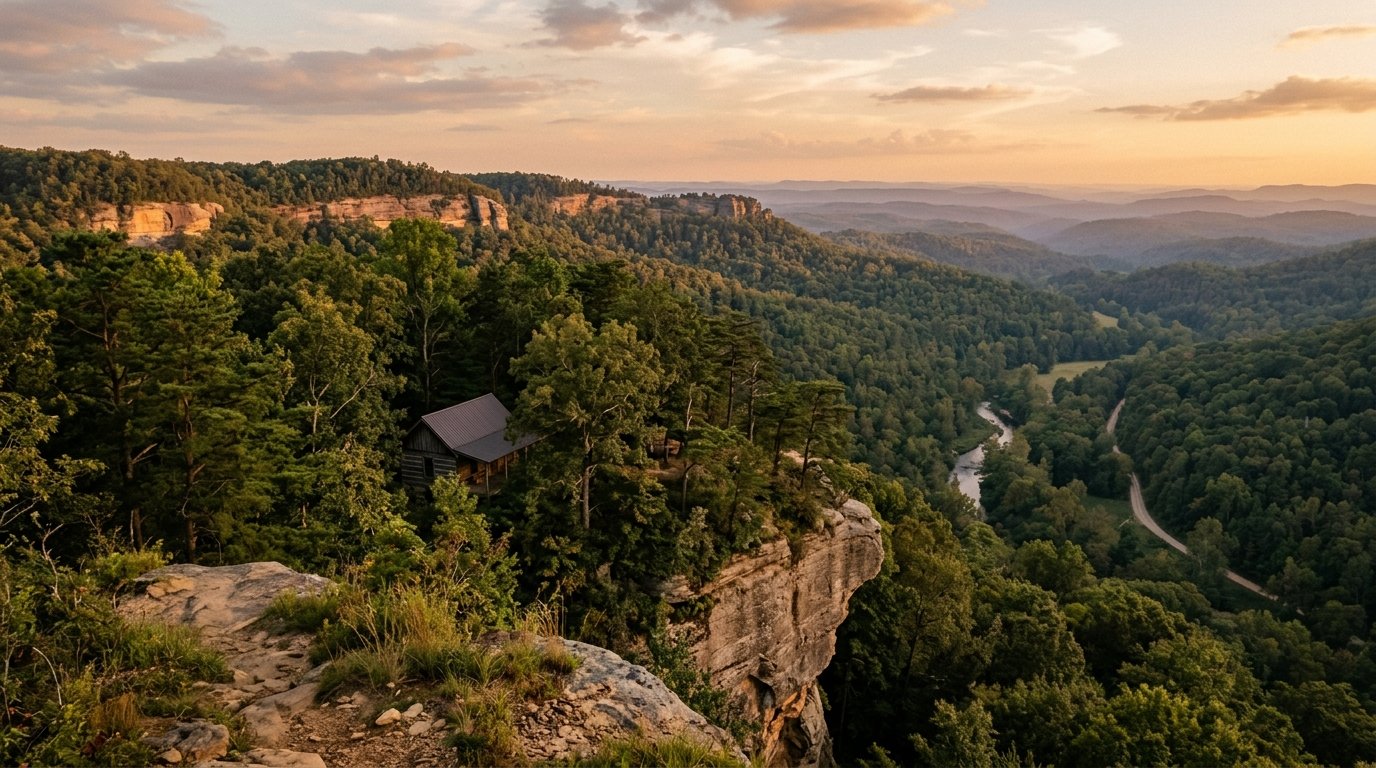
Pigeon Forge runs on attractions. Dollywood, the Parkway, dinner shows, and decades of tourism infrastructure pull enormous visitor volume, and the cabin inventory grew up to serve it. The Red River Gorge runs on terrain — sandstone arches, cliff lines, and climbing that draw people who came for the outdoors, not the entertainment strip. That difference shapes everything downstream: guest profile, seasonality, amenity expectations, and what a cabin has to be. A Pigeon Forge cabin competes on hot tubs, theaters, and proximity to the strip. A Gorge cabin competes on setting, character, and quiet. I compare the same trade-off against Tennessee in my Gatlinburg vs Red River Gorge page — Pigeon Forge is its higher-volume neighbor and deserves its own look.
Saturation honesty — maturity cuts both ways
Pigeon Forge is a mature short-term-rental market. That maturity is genuinely useful: deep booking data, established property managers, lenders comfortable with the asset class. It also means heavy competition, professionalized operators, and entry prices that already reflect rental income. The Gorge is earlier. Supply is thinner, comps are sparse, and the operator field is less professionalized — which is both the opportunity and the risk. My market report carries current sourced occupancy and rate context for the Gorge; I would rather you read dated numbers there than absorb either market’s reputation secondhand. Ask any Tennessee source for equivalently dated data before you compare.
Drive-time math for Kentucky and Ohio owners
If you live in Lexington, the Gorge is roughly an hour away; Pigeon Forge is closer to a three-and-a-half to four-hour drive. From Cincinnati, figure around two hours to the Gorge and four-plus to Pigeon Forge. That gap matters more for owners than for guests. A cabin you can reach in an hour gets checked after storms, shown to contractors, and enjoyed on a random Friday. A cabin four hours away runs almost entirely through a manager. Neither model is wrong — but be honest about which owner you are. My property management page covers what remote operation looks like here.
Where each market rewards you
Pigeon Forge rewards capital and operational polish: larger cabins, aggressive amenity packages, professional revenue management, and tolerance for competing against hundreds of near-identical listings. The Gorge rewards judgment: picking the right ridge, the right county for short-term-rental rules, and a property with character that photographs honestly. Rules vary by county here and change — verify current requirements on my STR rules by county page before you underwrite anything. And in both markets, run the deal on numbers, not vibes; my cabin deal analysis framework works for either state, even though I only practice in Kentucky.
The honest bottom line
I sell real estate in Kentucky, so weigh my perspective accordingly — I say so on every comparison page I write. Pigeon Forge is the bigger, deeper, more proven market, and for some investors that depth is exactly right. The Gorge is smaller, closer, earlier, and more character-driven, with thinner data and fewer guarantees. No return promises either way — Kentucky law and plain honesty both forbid them. If the Gorge side of the ledger interests you, start with the cabin investment guide and current market numbers, then decide with your eyes open.
Common Questions
Is Pigeon Forge too saturated to enter now?
Saturation is relative to your basis and operation. Mature markets still work for well-capitalized, well-managed cabins, but you are competing against professional operators and prices that already reflect rental income. Ask for current dated supply and occupancy data from a Tennessee source before deciding — I do not carry Tennessee numbers, and reputation is not data.
Is the Gorge just a cheaper Pigeon Forge?
No — it is a different product. The Gorge draws hikers and climbers rather than attraction traffic, supply is far thinner, and the season shape differs. Cheaper entry can come with thinner demand and sparser comps. Read my market report for current sourced Gorge figures rather than assuming a discount version of Tennessee economics.
Can you help me buy in Pigeon Forge?
No — I am licensed in Kentucky and work the Red River Gorge market. For Tennessee I can only suggest you find a local licensee there. What I can do is give you an honest Gorge-side comparison, current sourced market context, and access to Kentucky inventory, including off-market cabins via my GORGE text list.
Compare the neighboring Tennessee market in Gatlinburg vs the Gorge, or see how the Gorge stacks against Oklahoma’s cabin country in Broken Bow vs the Gorge.
Marcos Gil, REALTOR® · Keller Williams Commonwealth · Publisher of Invest in the Gorge · Based in Beattyville, working the whole Gorge corridor · Also owner of Central Property Services — any recommendation involving my other businesses is disclosed in writing. Not a mortgage loan originator; financing content is education, and loans come only from licensed lenders.
Text GORGE for the off-market list
Last updated: August 14, 2026