The Red River Gorge in Winter
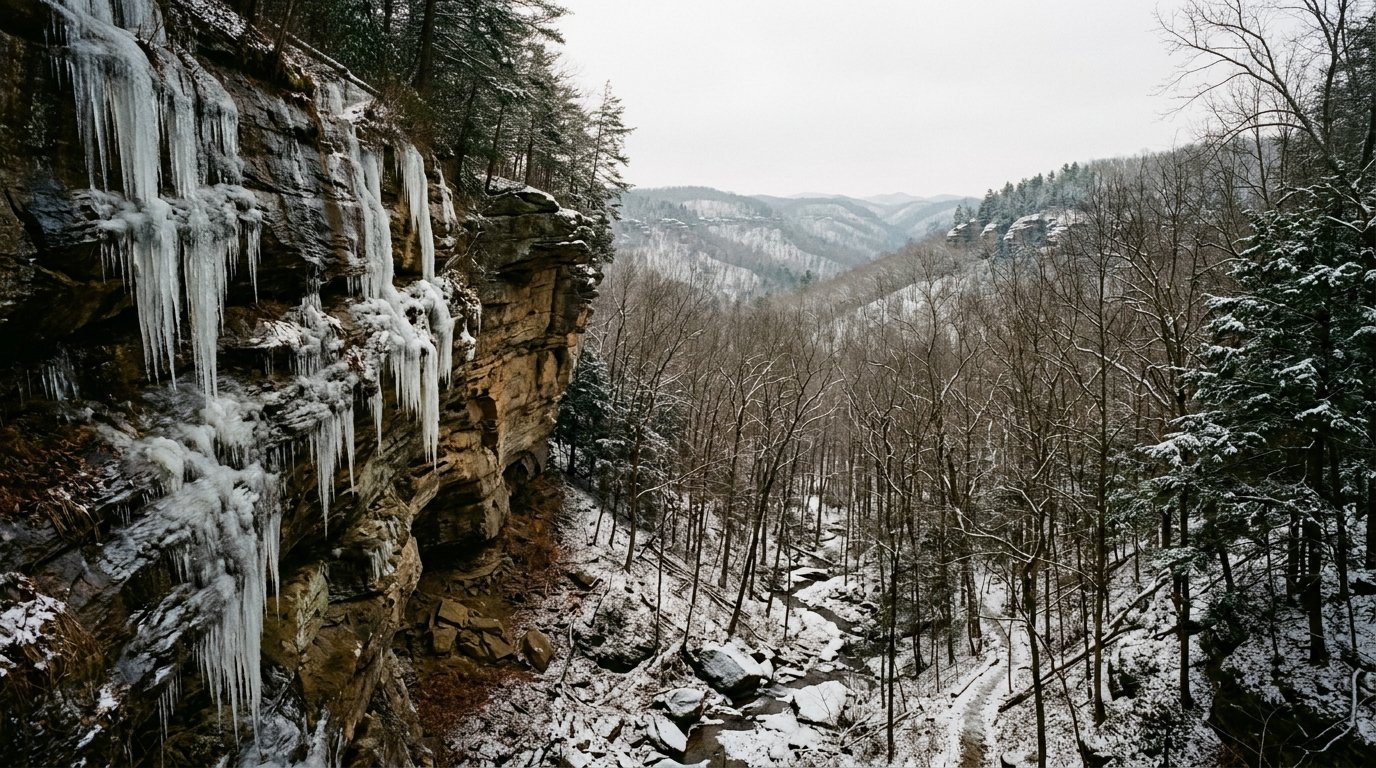
Ice on the sandstone, nobody on the trail — the season the Gorge keeps for itself.
The Short Answer
Winter is the Gorge’s quiet season — ice-draped cliff lines, open sightlines through bare hardwoods, and trails you can have nearly to yourself. For visitors it is the most underrated window of the year. For short-term-rental owners it is the honest trough: bookings thin out, some local businesses shorten hours, and cabins need real winterization against freeze damage. Owning here means planning for both truths — the beauty and the slow months — rather than pretending either away.
The season the crowds skip
From roughly December through February the Gorge empties out, and what remains is arguably its most dramatic face: seep-fed ice columns draping the cliff lines, waterfalls half-frozen into sculpture, and sightlines through bare hardwoods that summer foliage hides entirely. Arches you queue for in October stand silent on a January weekday. Winter hiking here demands respect — short daylight, ice on rock steps, and mud-freeze cycles on the trails — but for visitors willing to layer up, it is the best solitude-per-mile the region offers. My when to visit page places winter honestly within the full calendar.
Visiting well in the cold months
Winter trips run on different logistics. Daylight is short, so plan hikes for the middle of the day and keep ambitions modest — icy stairs and wet sandstone change the difficulty of familiar trails. Some local businesses shorten hours or close stretches of the week, so check current hours before driving to eat; my where to eat page explains the seasonal contraction, and cooking at the cabin becomes the default. The reward for all this planning is a fire, a hot meal, and a cliff line wearing ice that most visitors to this region never see.
The booking trough, stated plainly
Now the owner side, without varnish: winter is the slow season for Gorge short-term rentals. Demand thins after the holidays, weekday bookings become scarce, and revenue concentrates in whatever weekends weather and word-of-mouth deliver. Any underwriting that assumes summer pace year-round is fiction — insist on twelve-month numbers, and read the current sourced context in the market report rather than a listing agent’s annualized daydream. Owners who thrive here treat winter as known terrain: they budget for it, price for it, market the ice and the fireplace honestly, and use the slow weeks for maintenance the busy season will not allow.
Winterization — where slow-season money hides
Freeze damage is the classic Gorge cabin loss: a burst line in an empty cabin can quietly run for days. Winterization — insulating exposed plumbing, protecting well components, managing heat set-points during vacancies, draining what should be drained — is not optional here, and the slow season is exactly when to handle it. My maintenance costs page covers the broader budget. For the work itself, my repair company, Central Property Services, publishes a practical guide at centralroofrepair.com/winterization — and to be plain about the conflict, I own that company, so treat the referral accordingly and get competing quotes like you would for any contractor.
Owning the whole calendar
The winter question is really the ownership question in miniature: this market rewards people who accept the Gorge as it actually is — spectacular, seasonal, and slower in the cold — rather than the twelve-month resort of a spreadsheet fantasy. If that trade reads as acceptable to you, the cabin investment guide walks the full economics, and property management covers who watches the cabin when you are not there in January. And if you simply want to see the ice — book a quiet-season cabin. It is the cheapest research this site recommends.
Common Questions
Is the Gorge worth visiting in winter?
Yes, for the right visitor — ice-draped cliffs, empty trails, and open views through bare forest make it the most dramatic and least crowded season. It demands preparation: short daylight, icy trail sections, and reduced business hours. If you want solitude over convenience, winter is arguably the best-kept secret on the Gorge calendar.
How slow do winter bookings really get for cabins?
Slow enough that no honest underwriting ignores it — demand thins markedly after the holidays and concentrates in occasional weekends. Exact figures vary by cabin and year; the market report carries current sourced seasonal context. Insist on full twelve-month operating numbers on any cabin you evaluate, never a peak-season pace annualized.
What does winterizing a Gorge cabin involve?
Protecting plumbing and wells from freeze — insulation on exposed lines, sensible vacant-cabin heat set-points, draining where appropriate — plus checking roofs and gutters before ice arrives. Costs vary by cabin; treat it as a required annual line item. My repair company publishes a winterization guide, disclosed as my own business, and competing local quotes are always wise.
See where winter fits the full year in when to visit, and budget the season properly with cabin maintenance costs.
Marcos Gil, REALTOR® · Keller Williams Commonwealth · Publisher of Invest in the Gorge · Based in Beattyville, working the whole Gorge corridor · Also owner of Central Property Services — any recommendation involving my other businesses is disclosed in writing. Not a mortgage loan originator; financing content is education, and loans come only from licensed lenders.
Call or text (859) 310-1209
Last updated: August 14, 2026