
Access Roads, Easements & Surveys
Access roads and easements in the Gorge decide the whole question: a cabin you can’t legally reach is a view, not an asset. Powell County parcel lines and assessments are public record through the county PVA.
The Short Answer
Before anything else about a Gorge property, verify the legal right to reach it: deeded access recorded in the chain of title, not a neighbor’s handshake. Then get honest about the physical road — gravel grades, winter, and guest vehicles — and about boundaries, because many old parcels here have never had a modern survey. Title work and a current survey are the instruments that turn assumptions into facts.
Legal access first: deeded, recorded, verified
The foundational question on any rural parcel is brutally simple: do you have a recorded legal right to travel from a public road to the property? Long use, a mowed path, and a friendly neighbor are not that right. What you want is deeded access — frontage on a public road, or a recorded easement across intervening land — confirmed in the title search, not assumed from the listing. Properties with unresolved access do surface in this corridor, sometimes at tempting prices, and the discount exists for a reason: curing access after closing means negotiating with neighbors who hold all the leverage, or litigation. Neither belongs in your plan.
Easements: read what the paper actually grants
When access rides on an easement, the recorded language governs — and old easements can be narrow in ways that surprise. Width matters for construction equipment and septic trucks; permitted use matters if the easement predates any idea of nightly guests; maintenance obligation matters because someone pays for gravel and grading, and the deed may or may not say who. Utility easements deserve the same read, especially on land where a build is planned — my land guide goes deeper. A real estate attorney reading the actual instruments is money well spent; I flag the questions, and counsel answers them.
The gravel road reality, including winter
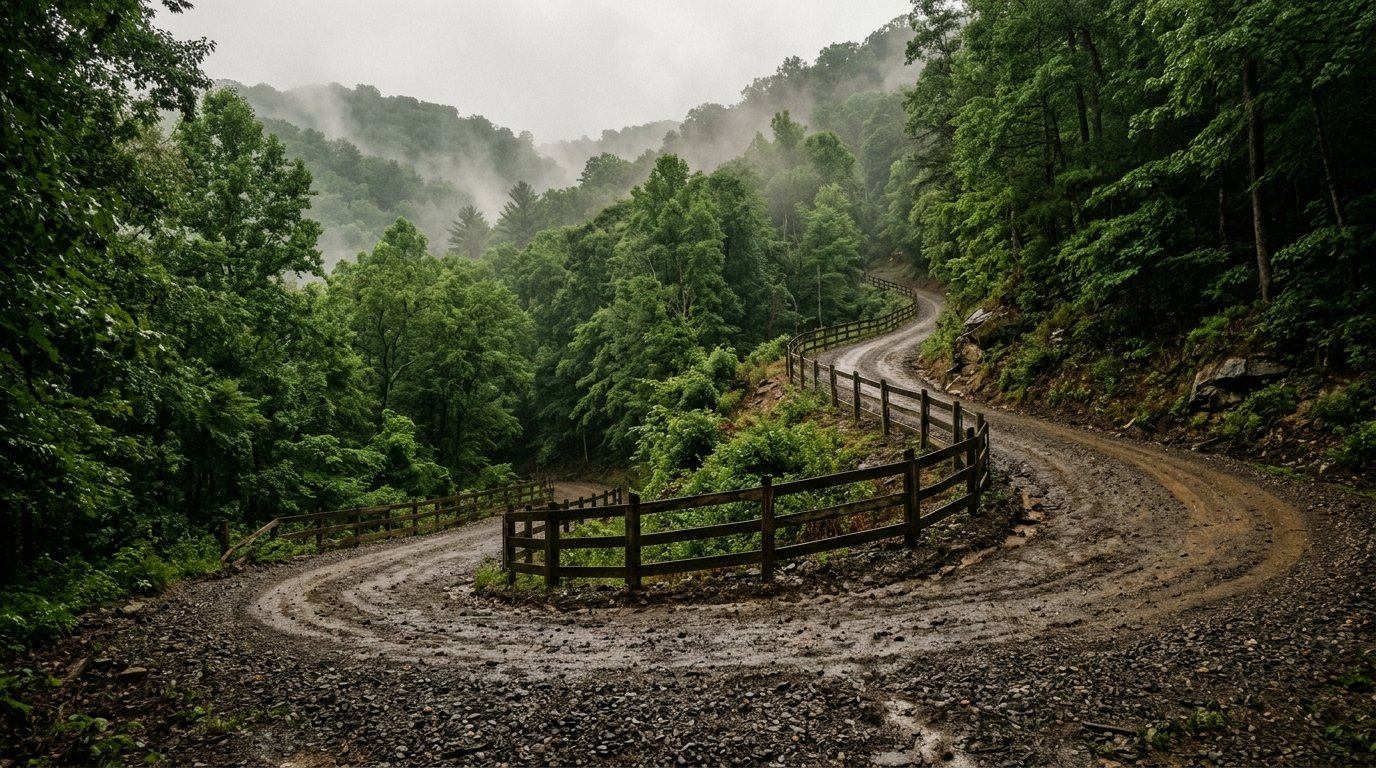
Physical access deserves as much honesty as legal access. Steep gravel that a truck climbs easily in June behaves differently in January freeze-thaw, and the corridor’s creek-bottom lanes have their own wet-season moods. For short-term rentals the test is harsher still: your access road must be drivable by a sedan full of guests arriving after dark in weather, or your reviews will document otherwise. Walk or drive the full last mile at the worst plausible time you can arrange, ask who maintains the road and what it costs yearly, and check for a written road maintenance agreement — its absence among several users is a red flag worth pricing.
Survey gaps are endemic to old parcels
A large share of land out here has passed through generations described by creeks, fence lines, and stones that no longer exist — old deed descriptions that no modern instrument has ever tested. The result: boundaries honored by custom that don’t match the paper, acreage figures repeated for decades without verification, and occasionally a cabin, barn, or septic field sitting partly on the neighbor. On any parcel where value rides on the land itself, a current boundary survey is not a luxury; it’s how you find out what you’re actually buying while you can still act on the answer. Price it into diligence from the start.
What title work actually does for you
The title examination traces ownership and surfaces what’s recorded against the property: easements, rights-of-way, mineral reservations — common in eastern Kentucky and worth understanding on any land purchase — liens, and gaps in the chain. Title insurance then backstops much of that work. Understand the limits: standard policies typically exclude matters a survey would reveal, which is exactly why survey and title work travel together on rural deals. Where issues surface, many are curable with time and counsel; the point of diligence is to find them while the seller still shares the incentive to fix them. I coordinate this sequence on every rural transaction I handle: (859) 310-1209.
Common Questions
The seller says the neighbor “has always allowed” access. Is that a problem?
It’s the classic problem. Permission can be withdrawn — by this neighbor or the next owner — and informal long use may or may not ripen into an enforceable right, a legal question only an attorney can assess on the facts. Treat any deal without recorded access as needing a cure before closing, priced and papered accordingly.
Do I really need a new survey if the deed states the acreage?
Deed acreage on old parcels is often inherited language, not measurement, and can be off meaningfully in either direction. If price is per acre, if boundaries are unclear, if you plan to build, or if the parcel has never had a modern survey, get one. Skipping it saves a known cost now in exchange for unknown costs later.
Who maintains a shared gravel road?
Whatever the recorded documents say — and often they say nothing, leaving maintenance to informal cost-splitting that works until it doesn’t. A written road maintenance agreement among users is the durable fix, and some lenders require one. Ask for it during diligence; if none exists, factor both the road’s condition and the neighbors’ dispositions into your decision.
This is part two of rural diligence — part one is septic and wells — and both feed the checklist in the cabin buyers starter kit.
Marcos Gil, REALTOR® · Keller Williams Commonwealth · Publisher of Invest in the Gorge · Based in Beattyville, working the whole Gorge corridor · Also owner of Central Property Services — any recommendation involving my other businesses is disclosed in writing. Not a mortgage loan originator; financing content is education, and loans come only from licensed lenders.
Verify before you offer
Last updated: August 14, 2026