What It Costs to Build a Cabin in the Red River Gorge
In the cost to build a cabin in the Red River Gorge, the floor plan is the cheap part. The hillside sets the price. The public land that anchors the Gorge’s draw is managed as part of the Daniel Boone National Forest.
The Short Answer
No honest page can hand you a per-square-foot number for building in the Gorge — bids move with materials, fuel, and crew availability. What stays constant are the drivers: steep-site excavation, well and septic installation, long utility runs, and the cost of hauling materials up gravel roads. Budget from current written quotes by builders who work this terrain, not from national averages, and expect the site itself to set the price as much as the floor plan does.
Why this page has no magic number
Construction pricing is volatile — lumber, concrete, fuel surcharges, and crew backlogs all move, and any total printed here would mislead you within a season. So this page does the durable work instead: it names the cost drivers specific to Gorge terrain so you can read builder quotes intelligently. When you are ready for real numbers, get two or three current written bids from builders active in these counties, and ask me for dated context on what comparable finished cabins have been selling for.
Site work: the line that surprises everyone
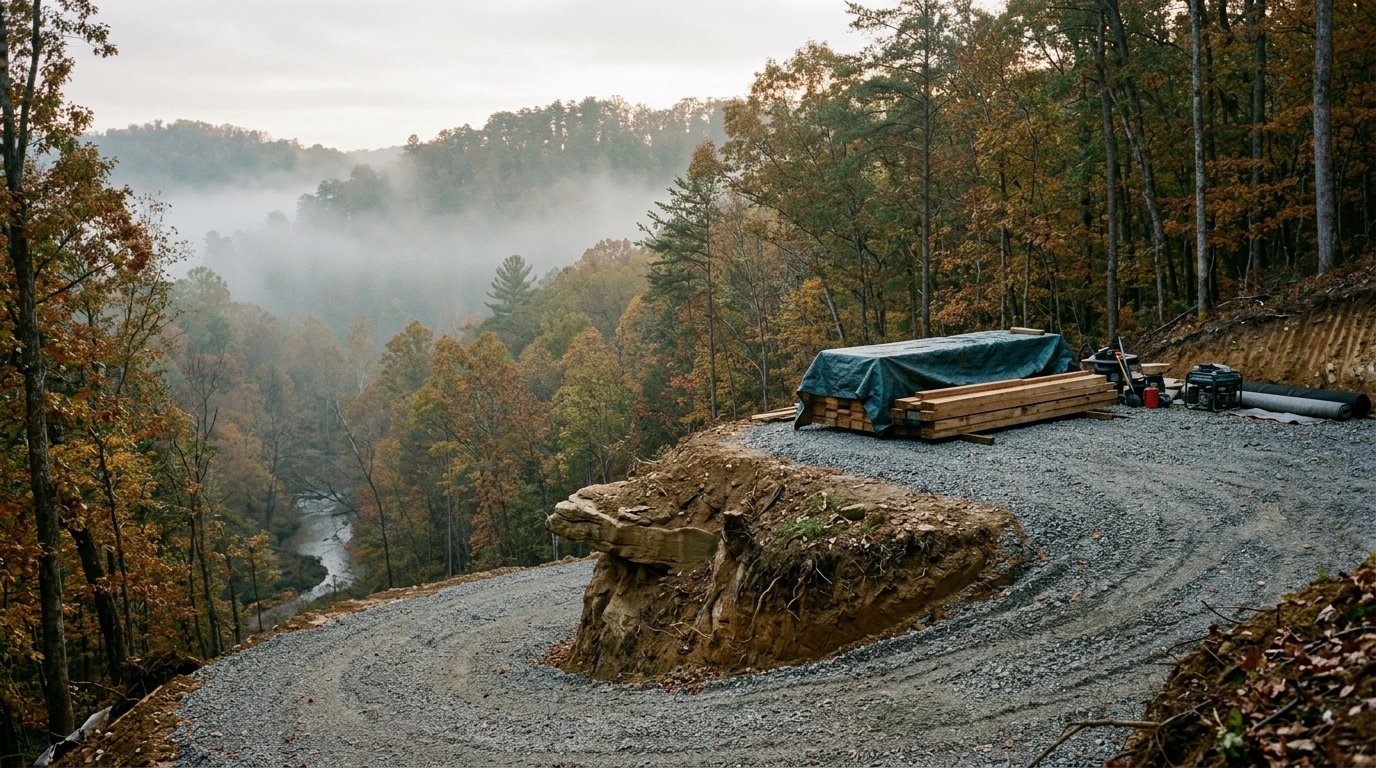
Flat lots are rare in cliff country. Cutting a pad into a hillside, benching a driveway to a grade a septic truck can climb, managing stormwater off sandstone, and hauling in gravel — this is where Gorge builds diverge hardest from a subdivision build. Two identical floor plans on two different parcels can carry radically different totals on excavation alone. Walk candidate land with site costs in mind; the buying land guide covers how to spot expensive ground before you own it.
Water and septic: drilled, not assumed
Outside the towns, plan for a drilled well and an on-site septic system. Well depth — and therefore cost — varies parcel to parcel, and septic requires a soil evaluation and permit through the local health department before you know what type of system the ground will accept. A parcel that fails its soil evaluation changes your whole project. Make septic feasibility a contingency in any land offer, and price the well from a local driller’s current quote, not a guess.
Utility runs and the gravel-road tax
Every foot between the road and your build site has a meter running on it: electric line extension, trenching, culverts, and the driveway itself. Long, scenic setbacks are exactly what buyers want and exactly what estimates underprice. Add the logistics tax — concrete trucks, lumber deliveries, and crane days all cost more when the last mile is steep gravel. Ask every bidder how they price remote access, and see the rural utilities guide for the connectivity side.
Financing a build, in brief
Construction and land loans work differently from standard mortgages — draw schedules, inspections, and often a conversion to permanent financing at completion. I am a REALTOR®, not a mortgage loan originator, so treat this as education only: the construction and land loans page explains the structures, and a licensed lender can tell you what you qualify for and at what current terms. Getting lender and builder talking early prevents the most common stall in rural builds.
How to actually budget
The working method: pick two or three candidate parcels, get site-specific input from a builder before you offer, make the offer contingent on septic evaluation, and collect current written quotes for well, power extension, and driveway. Then add contingency — rural builds punish thin margins. It is slower than falling for a floor plan first. It is also how the cabins that pencil get built. When you want a second set of eyes on the numbers, that is what I am for.
Common Questions
What does it cost per square foot to build in the Gorge?
Any figure I printed would be wrong by the time you read it — materials and labor pricing move too fast, and Gorge site work varies too much parcel to parcel. Get current written quotes from builders working in these counties and compare them line by line. I can share dated context from recent local projects on request.
Is it cheaper to build or buy an existing cabin?
It depends on the moment and the parcel. Building lets you control layout and systems; buying existing gets you rental history and known costs. Compare a real build quote on real land against current listings — the market report and the cabin deal analysis framework give you the structure to run that comparison honestly.
What kills Gorge build budgets most often?
Site work and access, in that order. Steep excavation, failed or marginal septic soils, long power runs, and driveways that need engineering are the classic overruns. All four are knowable before you buy the land — which is why the diligence sequence matters more than the floor plan you have picked out.
Start with buying land to pick a parcel that will not eat your budget, then read construction and land loans for the financing structure.
Marcos Gil, REALTOR® · Keller Williams Commonwealth · Publisher of Invest in the Gorge · Based in Beattyville, working the whole Gorge corridor · Also owner of Central Property Services — any recommendation involving my other businesses is disclosed in writing. Not a mortgage loan originator; financing content is education, and loans come only from licensed lenders.
Text KIT for the starter kit
Last updated: August 14, 2026