Domes, Treehouses & Unique Stays in the Gorge
Red River Gorge glamping and unique stays are the listings that stop the scroll — and the underwriting underneath them. The public land that anchors the Gorge’s draw is managed as part of the Daniel Boone National Forest.
The Short Answer
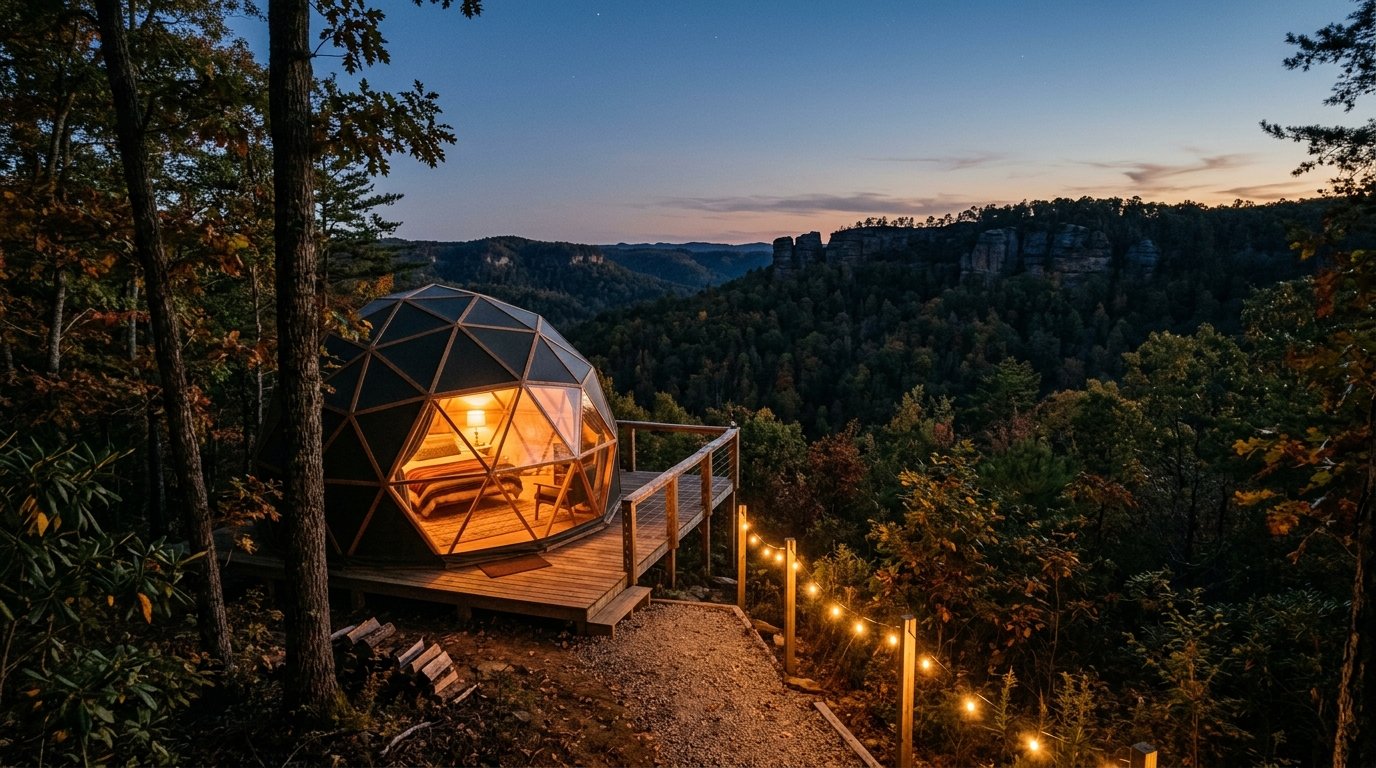
Domes, treehouses, and other unique stays are the Gorge’s breakout lodging segment because they photograph like nothing else and market themselves on social feeds. The catch sits underneath: unconventional structures can be harder to finance and appraise, county rules and septic requirements apply exactly as they do to cabins, and novelty demand is less proven over a full cycle than the cabin market. The opportunity is real; underwrite it more conservatively than a cabin, not less.
Why unique stays behave differently
A well-sited dome or treehouse does something a cabin cannot: it markets itself. Guests photograph the stay itself, post it, and the listing earns reach no ad budget buys. In a destination with the Gorge’s scenery, that flywheel is genuinely powerful — the stay becomes the trip’s destination rather than its lodging. That is the honest bull case. The rest of this page is the honest underneath, because the segment’s photogenic surface hides its least photogenic problems.
Financing and appraisal, the quiet obstacle
Education only: conventional mortgages lean on comparable sales, and a dome on a ridge may have few or none — which can mean larger down payments, alternative loan structures, or lender hesitancy toward unconventional or off-grid structures. None of this is prohibitive; all of it belongs in your plan before you order a kit. Talk to a licensed lender early about what they will actually finance, and see the construction and land loans page and DSCR loans page for how the relevant structures work.
Same land, same rules
A dome is not a loophole. County short-term-rental requirements apply to unique stays exactly as to cabins — verify current rules on the STR rules by county page and with the county itself. Septic obligations apply too: a soil evaluation and permitted system, sized for occupancy, no matter how small the footprint looks. Site work, utility runs, and gravel-road logistics track the same cost drivers as the cost-to-build guide details. Skipping this diligence because the structure is novel is how novel projects die.
Underwriting the novelty honestly
Unique stays carry a specific risk cabins do not: the segment is newer, and its demand curve over a full market cycle is less proven. Novelty can also age — this year’s breakout format is eventually everywhere. So underwrite conservatively: use the sourced, dated figures in the market report for regional context rather than a seller’s screenshot of a peak month, stress-test your numbers at occupancy well below the listing photos’ implication, and treat social-media reach as upside, not baseline. No returns are promised here; that is the point.
If you are still in — the sequence
The build order that works: land first, with septic feasibility and access solved before any structure decision; lender conversations second, so financing shapes the plan instead of ambushing it; county verification third; then the structure. Walk candidate ground with the buying land guide in hand. Done in that order, a unique stay in this landscape is a defensible, differentiated position. Done in reverse — kit ordered, land regretted — it is an expensive lesson with a great view. Text me a parcel and I will give you the terrain read first.
Common Questions
Are domes and treehouses good investments in the Gorge?
They can be strong differentiators in a crowded cabin market, and their social-media reach is real. They also carry financing friction, appraisal uncertainty, and a shorter demand track record than cabins. No outcome is promised — underwrite with conservative assumptions and current sourced market data, and decide with both columns filled in.
Is it harder to get a loan for a dome or treehouse?
Often, yes. Lenders lean on comparable sales and standard construction categories, and unique structures may fit neither, which can mean bigger down payments or alternative financing. This is education, not lending advice — I am not a loan originator. Talk with a licensed lender about your specific structure early, before committing to land or a kit.
Do STR rules apply to glamping structures too?
Assume yes. County short-term-rental requirements, septic permitting, and health regulations apply to paid overnight lodging regardless of the structure’s shape or size. Verify current requirements with your specific county before building or listing — the STR rules by county page tracks context, but the county itself is the source of record.
Ground the numbers in the cabin deal analysis framework and the current sourced figures in the market report.
Marcos Gil, REALTOR® · Keller Williams Commonwealth · Publisher of Invest in the Gorge · Based in Beattyville, working the whole Gorge corridor · Also owner of Central Property Services — any recommendation involving my other businesses is disclosed in writing. Not a mortgage loan originator; financing content is education, and loans come only from licensed lenders.
Call or text (859) 310-1209
Last updated: August 14, 2026