
Gorge Journal · 259 Three Mile Road · Day 4 of 30
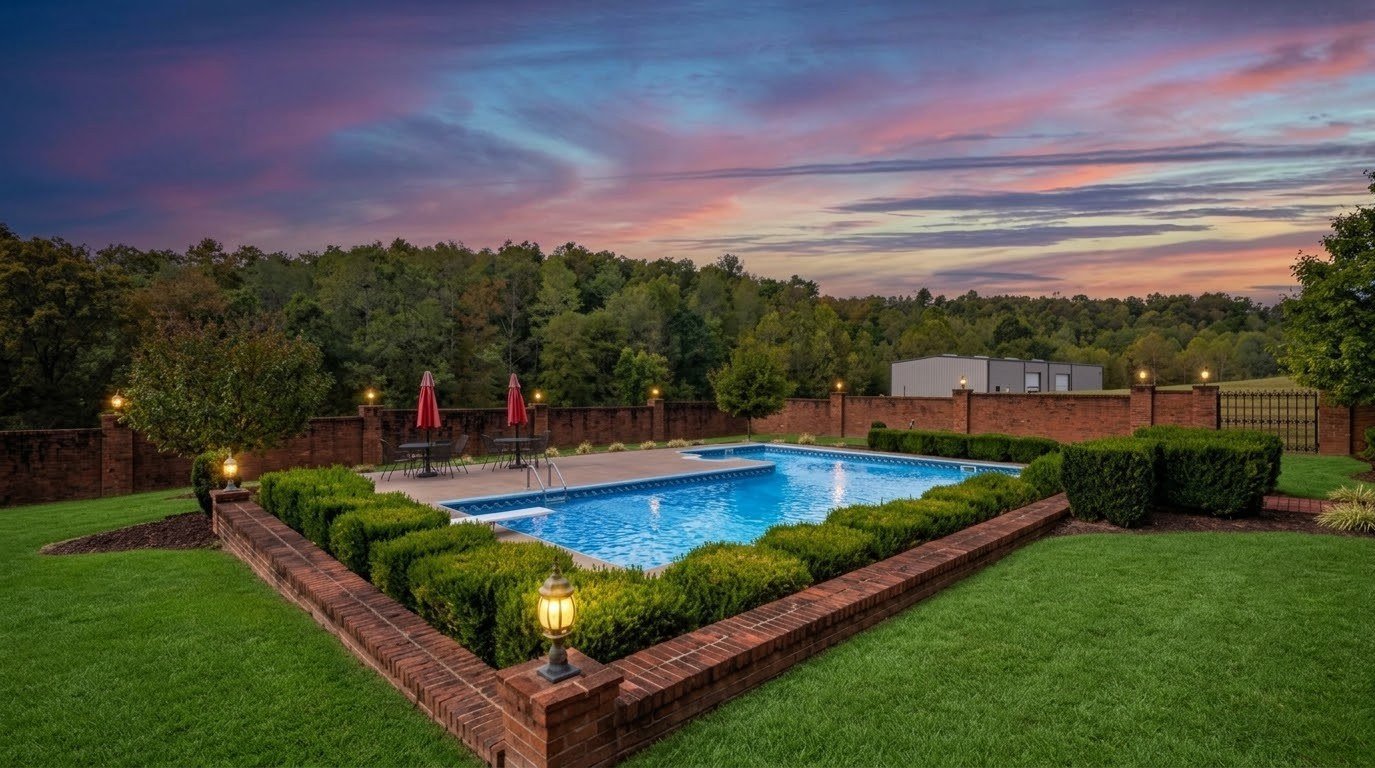
An in-ground pool inspection in Kentucky covers four things: the shell and its surround, the circulation equipment, the electrical bonding, and the barrier around the water. The Kentucky Residential Code sets the barrier rules for new pools; an older pool is measured against them anyway, by inspectors, insurers and buyers. 259 Three Mile Road has an in-ground pool with a diving board and a concrete surround. Here is the list.
What the Kentucky Residential Code says about barriers
815 KAR 7:125 makes the 2015 International Residential Code, as amended by the 2018 Kentucky Residential Code (Third Edition, August 2024), the mandatory residential code for the state. The current version took effect on 3 December 2024. Its swimming pool section (R326 in the 2018 Kentucky Residential Code) carries the barrier rules for private pools:
- A barrier at least 48 inches high, measured on the side facing away from the pool, with no more than 4 inches of clearance at the bottom.
- Where the barrier is made of vertical and horizontal members and the horizontals are close together, the spacing between verticals is limited to 1.75 inches.
- Pedestrian gates that are self-closing and self-latching.
- Where a wall of the house forms part of the barrier, either a powered safety cover meeting ASTM F1346 or an alarm on every door that opens to the pool, or another approved means of protection.
- Suction outlets designed and installed to ANSI/APSP-7, the entrapment standard.
Those rules govern new construction. A pool built before them is not automatically out of compliance, but the same regulation says permits and inspections are not required for a single-family dwelling unless a local ordinance requires them, so there may be no inspection record for this pool at all. Your inspection is the record. Measure the existing barrier against the 48-inch standard and check the gates, because your insurer will ask.
The shell and equipment list
- Shell. Cracks, hollow-sounding spots in plaster or gunite, the condition of the coping, and the expansion joint between the coping and the deck.
- Deck. Heaving, settling or trip edges in the concrete surround, and drainage away from the house.
- Diving board. The board, the stand and the anchor bolts, and whether the deep end matches the board’s envelope. A pool inspector confirms this; a general home inspector usually will not.
- Circulation. Pump, filter, any heater, valves and visible plumbing; a pressure test of the underground lines if the inspector offers one.
- Electrical. Bonding of the equipment and the water, and GFCI protection on pool circuits and lights. A licensed electrician.
- Service history. Who opens and closes the pool each year, and what they replaced. Ask for the invoices.
[MARCOS: pool construction type (plaster, vinyl or fiberglass), approximate age, and the current service company, from the seller]
The disclosure line and the insurance call
KREC Form 402, the Seller’s Disclosure of Property Condition, has a line for “Pool, hot tub, sauna” and asks the seller to state whether there have been problems, whether or not they were corrected. Read that answer before the inspection so the inspector knows where to look.
Many general home inspectors exclude pools from their scope. Hire a pool contractor or a dedicated pool inspector for this part. Then call a licensed insurance agent: a diving board is a rating question for many carriers, and the answer belongs in your budget before the inspection period ends. If the property might ever be rented, our insurance page for Kentucky rentals, linked below, covers the extra questions.
Questions buyers ask
Is a fence around the pool required in Kentucky?
For new pools the Kentucky Residential Code requires a barrier at least 48 inches high with self-closing, self-latching gates. For an existing pool, your insurer may require one regardless of when the pool was built. Measure what is there against the 48-inch standard.
Does the diving board have to come off?
No regulation in the sources read for this post says so. Carriers differ on diving boards. Ask a licensed insurance agent for this address before you decide.
What does closing a pool for a Kentucky winter involve?
Lowering the water, blowing out and plugging the lines, adding antifreeze to the plumbing, and covering the pool. A written quote from a pool service is a real number for the annual budget.
The listing and the next read
The property: 259 Three Mile Road, Beattyville, KY, listing page, with the film, the photographs and the details table. Related diligence: our insurance guide for Kentucky rental properties. Private showings by appointment: call or text Marcos Gil at (859) 310-1209.
Sources. 815 KAR 7:125, Kentucky Residential Code, Kentucky Legislative Research Commission, read 28 September 2026. 2018 Kentucky Residential Code, Section R326, and 2018 Kentucky Building Code, Section 3109.9, Department of Housing, Buildings and Construction, read 28 September 2026. KREC Form 402, read 28 September 2026. FlexMLS 26025260, 27 September 2026.